
Dog Training in Bournemouth
Kirsty's Paws Dog Training
Kind, Friendly and Effective
Accreditations That Back my Expertise

The extra support you get from Kirsty is fantastic and the handouts are next level. So supportive and pragmatic. Not to mention she makes your Dog feel like the most important Dog she has ever met.


Dog Training Services Across Bournemouth
Key services overview
Kirsty’s Paws offers kind, friendly and effective Dog training services across Bournemouth, Wimborne and Ferndown. All training is reward-based, force-free and tailored to support both you and your Dog with practical, real-life solutions.
Puppy Programmes
One-to-one puppy training designed to give you the very best start. Ideal for new puppy owners who want personalised guidance on early training, behaviour and building strong foundations at home.
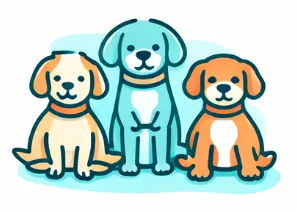
Puppy Classes
Fun, friendly and relaxed small-group puppy classes that focus on confidence, essential life skills and positive early social experiences using reward-based methods.
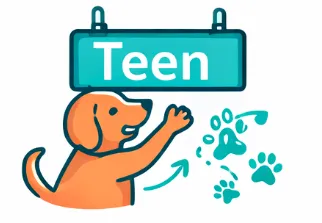
Teen Classes
Supportive classes for adolescent dogs, helping guide you through the teenage phase with calm, structured training that builds focus, confidence and good behaviour.
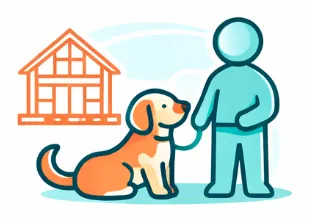
1-2-1 Training and Behaviour Support
Personalised one-to-one training in your own home to help with behaviour concerns, recall, loose lead walking, calmness and confidence, always using kind, force-free methods.
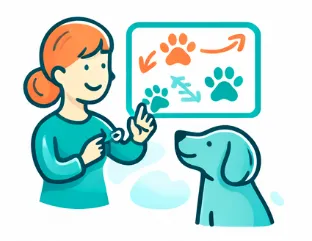
Workshops
Specialist workshops covering topics such as canine body language, enrichment and reactive dog support, designed to deepen understanding and strengthen your relationship with your dog.

Online Training
Flexible online training and support options, providing guidance, resources and continued learning to support you and your dog wherever you are.
About Kirsty's Paws
Transforming Behaviour, Building Bonds
At Kirsty’s Paws, I provide professional, friendly, and award-winning dog training across Ferndown, Wimborne, Corfe Mullen, Sturminster Marshall, and Bournemouth. I'm a highly qualified trainer with over 10 years of experience, I offer one-to-one sessions, small group classes, and expert workshops in canine behaviour. My reward-based methods are kind, effective, and tailored to each dog’s needs—helping you feel confident, supported, and connected with your dog.
A Helpful Guide to Enrichment for Dogs
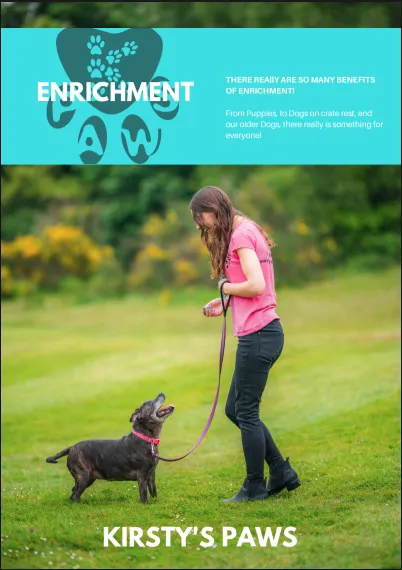
Free Guide: Enrichment for Puppies, Adult Dogs, and Seniors
A free, easy-to-read guide designed to help dog guardians understand the benefits of enrichment at every life stage. Using kind, science-based principles, this guide explains how enrichment supports calm behaviour, confidence, and wellbeing — with practical ideas suitable for puppies, adult dogs, and older dogs alike.
Dog Training Advice & Tips
Expert Dog Training Insights
Car Travel
“It’s really important to create pleasant associations with being in the car, whether your Dog is anxious, over-excited or suffering from the effects of motion sickness this is extremely valuable for our young Puppies, as well as our older Dogs.” - Kirsty Everard
Introduction:
Taking your Dog on adventures in the car should be a pleasurable experience for you both, but it can be really difficult if they bark, jump about, or are sick.
If your Dog is a rather vocal passenger, can’t settle, or suffers with motion sickness in the car then this information will really help you!
Motion sickness is particularly common in Puppies and young Dogs because the structures in the ear that help with balance aren’t fully developed, many do grow out of it but an estimated 1 in 4 don’t, even if the sickness gets better as they mature it can create negative associations with the car.
It’s really important to create pleasant associations with being in the car, whether your Dog is anxious, over-excited or suffering from the effects of motion sickness this is extremely valuable for our young Puppies, as well as our older Dogs.
Here are 9 things you should consider:
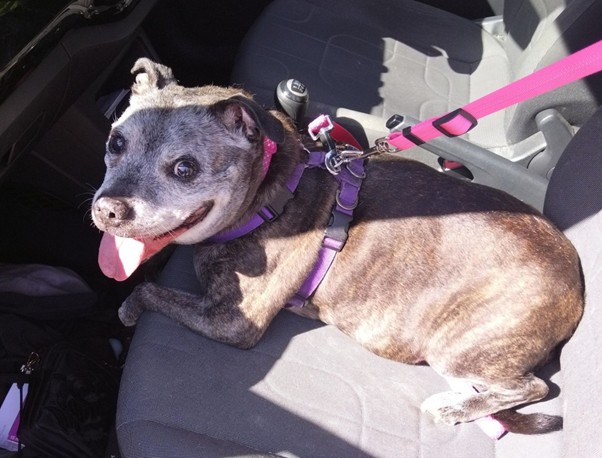
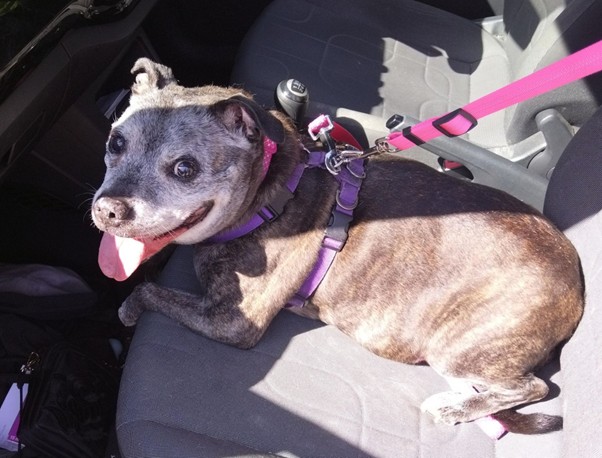
1) Safety - when you travel with your Dog it’s important that they are safe and secure, this could be in a suitable crate, or on an appropriate harness and seatbelt attachment
2) Food - avoid feeding your Dog just before travelling, but don’t starve them before either because if they suffer motion sickness, or are sick due to anxiety, then not feeding them may make them bring up less but it won’t stop them from vomiting – missing out a meal can also cause stress vomiting in some Dogs! If your Dog is due a meal then try feeding them a small and light meal at least 3-4 hours before your journey
3) Water - If your Dog pants, or is sick in the car then this can make them dehydrated so be sure to have plenty of fresh water available
4) Ventilation – a bit of fresh air can really help your Dog, especially if they suffer with motion sickness, open a window enough to allow in fresh air, but not so much that your Dog can put their head out because we don’t want bits of grit or debris causing injury to their eyes, or to distract other motorists! There is also a risk that if a window is open too widely that it may be viewed as an escape route.
5) Air Locks - Opening the windows prior to closing the doors can also prevent an air lock forming when the doors are shut, which can be extremely uncomfortable for Dogs and especially Puppies, when the doors are shut you can then close the windows, especially if you will be putting on the air conditioner
6) Air fresheners – remove any air fresheners because these can be overwhelmingly strong for our Dog’s highly sensitive sense of smell
7) Adaptil is a synthetic pheromone which can help to promote calmness and reduce anxiety, you can buy plug in diffusers for the home, and a spray which can be used in the car – by having both your Dog will be calmer when you begin travelling, as well as in the car
8) Music has also been shown to have a calming effect, classical music, soft rock and reggae have all been shown to have beneficial effects
9) Ramps – getting into the car may be difficult and cause discomfort for some Dogs, some Dogs also dislike being picked up – teaching your Dog to use a ramp to get in and out of the car can help them too
Training Tips for Safe and Enjoyable Car Travel
Please contact me for additional training support, but here are some tips to help you.
Remember to keep your training sessions in and around the car short and sweet; keep in mind that over doing it can actually result in anxiety levels escalating so it’s always better to end on a high note rather than trying to continue. Be patient and don’t try to rush through the process, you’ll get far better success in the long run if you take time working at your Dog’s pace.
Start by working around the car every two or three days, use whatever your Dog loves most, this may be their favourite treat, or a game with their favourite toy: if your Dog is uninterested in taking food, or playing with you, then start a little further away from the car where they are comfortable and gradually move closer, be sure to go at their own pace and keep sessions really short and fun
When your Dog is ready to move closer to the car do this in very small stages, 30cm at a time, don’t be afraid to move further away if you need to at any point
Try scattering a few extra tasty treats on the ground near the car, you could also try giving your Dog their meals around the car (be sure to do this at a distance where your Dog is comfortable so that they eat their food at a normal pace and don’t just inhale it!)
Once your Dog is comfortable approaching the car, the next stage is to ask them to get in it, at first do this with the engine off, open all of the doors and the boot so that your Dog won’t feel trapped and use a lead for safety, a 2m long line would be ideal (avoid using retractable leads to ensure your Dog’s safety and make sure the car is in a safe location)
Repeat the earlier steps using your Dog’s favourite food or toys to help create nice associations inside the car, let your Dog see you place their treats in the car, so that they are within reach for your Dog, encourage your Dog to enjoy their treats, but go back to an easier stage if needed
As your Dog becomes happier leaning in to reach their treats you can start to place them a little further inside the car, eventually they will need to step into the car – make sure you use something extra tasty at this point! This is where your long line will come in handy because your Dog may choose to hop in and out the other side of their car, be sure to keep the lead nice and slack at all times
Next you can sit in the car and encourage your Dog to join you, using their treats or favourite toy, be careful to ensure you do not pull on the lead (you may need an assistant outside of the car at this stage to help make things easier)
As your Dog becomes more confident at getting in and out of the car, you can start to hide their treats so that they spend a little longer in there, or sit with them feeding them treats for a little longer – be sure to still keep sessions short and sweet!
At this point you can also give your Dog calming activities to enjoy in the car, such as a long-lasting chew, stuffed Kong, or Lickimat
Next you can begin to close the car doors, at first you may need to be inside with your Dog so an assistant may be helpful, open the windows slightly first to minimise any pressure changes and shut the doors as carefully and quietly as possible, leaving the door closest to your Dog until last
Now you can build up the length of time that you are able to sit quietly together in the car, again you can use long lasting chews, a Kong, Lickimat, or even practice their settle on a mat
When your Dog can jump into the car and sit with you calmly enjoying some treats with all the doors shut, then it’s time to progress to starting the engine
Repeat all of the above steps with the engine on, so that your Dog can get used to the sound and vibrations, you may need to start with just a few seconds and gradually increase the time that the engine is on
When your Dog is comfortable sitting in the car with the engine on it’s time to add in some movement, if you have an assistant (who is insured to drive your car) it may help so that you can concentrate on your Dog – if you don’t have an assistant spend a little time making sure your Dog can still sit comfortably whilst you are in the driver’s seat first
Initially only move the car slowly forward a meter or two and be sure to brake gradually, be really careful not to rush this stage, very gradually increase the distance that you move over the next few weeks and if your Dog seems at all anxious end the session and restart going a smaller distance
At first select short routes that avoid too many traffic lights, or roundabouts so that your Dog won’t have too much extra movement
As your training progresses try driving to a nearby park to have some fun together before another short drive home
Introducing a Ramp
Care should be taken when getting your Dog in and out of the car. You’ll want to prevent your Dog from jumping whilst they are still growing to protect their joints, but lifting your Dog might be difficult, especially if they are a large breed. Using a ramp is the perfect solution.
Make sure your sessions are short and fun, so that your Dog really enjoys this exercise.
To introduce a ramp to your Dog, start by laying it on the floor and letting your Dog investigate. You can use treats to make it a really positive experience
When your Dog is relaxed you can start to encourage them to step onto the ramp while it is lying flat on the floor. Reward them for every paw contact at first, before gradually getting them to walk along it from one end to the other before rewarding
The next stage is to elevate the ramp slightly so that your Dog can walk up and down a slight incline. A curb is perfect for this
When they are happily moving back and forth along the ramp at a shallow incline, you can attach the ramp to your vehicle and practice getting them to move up the ramp and into your car. Reward highly as soon as they are in the car before getting them to move down the ramp again
Over time you can add cues to prompt your Dog to get in and out of the car using the ramp
Please contact me if you have any questions or would like any additional support
Introducing a Ramp
Video from Kirsty's Paws Terrific Teen Online Course - View the Online Course Page on my website for more information
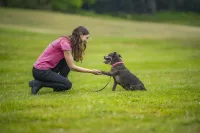
Let’s Do something great together
Kind, friendly and effective reward-based dog training in Dorset, supporting puppies, adolescent dogs and adult dogs with calm, force-free methods.
Kind Words From Happy Dog Owners
Words From my Clients
Feedback from dog owners who have experienced the calm, friendly and effective training approach at Kirsty’s Paws. These reviews reflect real experiences and the difference kind, reward-based training can make for both dogs and their people.

Kind, friendly and effective reward-based dog training across Bournemouth, supporting puppies, adolescent dogs and adult dogs with calm, force-free methods.
Phone: 07852 644190


Copyright 2026. Kirsty's Paws. All rights reserved.
Kirsty's Paws is a Registered Trade Mark UK00003551677
Privacy Policy | Terms and Conditions | Reviews